.
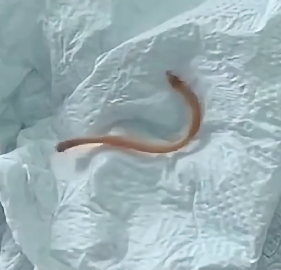
An ordinary dinner took an unexpected turn when something strange appeared to move inside a frying pan. At first, the pale, worm-like shape looked disturbingly alive. As it twisted among the pieces of food, the immediate question was impossible to ignore: Was this a parasite, a piece of tissue, or something else entirely?
The discovery was enough to turn an ordinary meal into an unsettling experience. Once something unusual appears in food, even familiar ingredients can suddenly seem suspicious.
But there is an important lesson behind moments like this: a worm-like appearance does not automatically mean a parasite is present. Identifying an unfamiliar object requires more than a quick glance, and food safety decisions should never depend on guesswork.
Whether the object turns out to be animal tissue, a foreign contaminant, or a possible parasite, knowing how to respond can help protect your health and prevent the same problem from affecting someone else.
Why Can Something in Cooked Meat Look Like a Parasite?
Meat is made up of several different tissues, including muscle fibers, connective tissue, fat, and blood vessels. When heated, these components can change shape, shrink, separate, or become more visible.
A pale strand or irregular piece of tissue may therefore resemble a worm without actually being one. Cooking can also make some structures look different from how they appeared in the raw product.
Other possibilities include an insect larva or another foreign object introduced during production, storage, or food preparation. The explanation depends on the food involved, the object’s appearance, and the circumstances in which it was discovered.
It is not possible to identify a parasite reliably from a dramatic description alone. A clear photograph may help a qualified food-safety professional or laboratory assess the object, but some cases require closer examination.
The safest response is to avoid eating the questionable portion while the situation is assessed.
Leave a Reply