.
I took one step closer, then another.
Introduction: Witnessing the Unknown at the Shore
Beaches have long served as natural boundaries between land and sea, offering both tranquility and mystery. Throughout centuries, shorelines have been the setting of countless unexplained phenomena, often blending scientific curiosity with human intrigue. The encounter recounted here is not merely a personal experience, but a reflection of our ongoing fascination with the unknown—especially those mysteries the ocean still holds. This article takes an analytical, science-backed look at the story, situating it within the broader context of marine biology, oceanography, and cultural attitudes toward unexplained phenomena.
Environmental Context: The Ocean’s Dynamic Edge
Shorelines are complex environments where tides, waves, and local ecology interact daily. The observation of unusually wet sand suggests not just the retreat of water, but possibly a deviation from normal tidal behavior. Such anomalies can result from a variety of natural causes, including atmospheric pressure changes, seismic activity, or even rare meteorological events like tsunami warnings or storm surges. However, deliberate patterns—such as water appearing to avoid contact with a certain area—are extremely uncommon and warrant scientific scrutiny. In coastal zones, these occurrences are sometimes linked to biological factors, for example, the movement of large marine animals or the presence of substances altering water flow.
The Encounter: Observing an Unexplained Creature
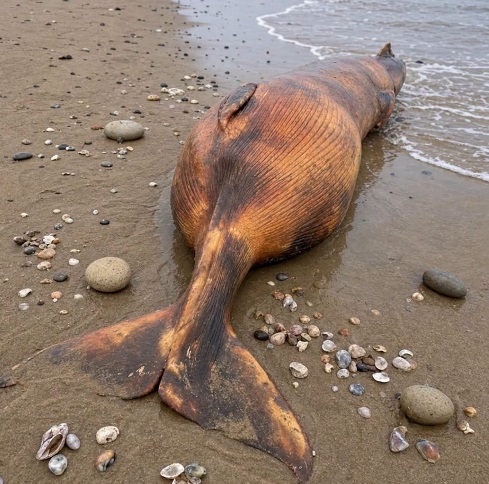
The narrative brings readers face-to-face with an entity that defies immediate classification. Notably, the creature’s breathing pattern stands out: slow, deep expansions suggest calm and perhaps adaptation, similar to certain marine mammals when resting ashore after strenuous activity. Marine biology documents numerous cases of stranded animals such as dolphins and whales, but their breathing under stress is often rapid and shallow. The slow, rhythmic breathing here may point to a lifeform well-adapted to both aquatic and terrestrial environments, or perhaps an organism unknown to science.
With skin described as layered, glassy, and semi-translucent, this being diverges sharply from typical marine or amphibious animals. Some deep sea creatures, such as jellyfish or salps, have translucent bodies, and certain bioluminescent fish exhibit visible internal structures, creating flowing effects much like the described dark currents beneath the skin. These visual cues invite comparison to known species, but also highlight gaps in marine research—especially at depths rarely surveyed.
The creature’s tail movement, transforming sand into something resembling ash, hints at unknown chemical or biological interactions. Some marine organisms, like stingrays or eels, disrupt sediment during movement, occasionally secreting substances that alter its appearance. The phenomenon of sand turning to ash-like material is, however, not documented in current scientific literature, prompting questions about new forms of marine life or environmental contamination.
Leave a Reply