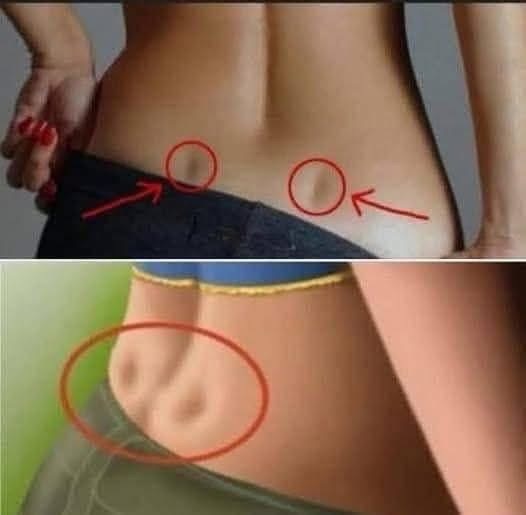
.
Have you ever noticed two small, natural dimples on the lower back, right above the buttocks? Many people, especially women, have them, while others do not. They are often called Venus dimples, named after the Roman goddess of beauty, but they are not just a cosmetic quirk. These tiny indentations actually tell us something surprising about blood circulation, health, and even how the body is built.
For older adults who pay attention to every signal their body gives them, knowing what these dimples mean can be fascinating. Our bodies often whisper little secrets about our health, and these dimples are one of those quiet but meaningful signs.
What Are Venus Dimples?
Venus dimples are the small, naturally occurring indentations on the lower back, just above the buttocks. They form where the skin is pulled by a small ligament attached to the pelvic bone. Unlike belly fat or muscle tone, these dimples are not something you can “work out” to create. You either have them due to genetics or you do not.
For men, similar indentations are sometimes called Apollo dimples, but the idea remains the same. They are connected to bone structure and blood flow, not to body fat or weight.
What Do These Dimples Mean for Your Health?
Scientists and health professionals have long been curious about what Venus dimples signify. While they are not a “guarantee” of health or fitness, research suggests they can be linked to:
Better Blood Circulation
These dimples are believed to indicate a body structure where blood circulation in the pelvic region is more efficient. For older adults, this can mean fewer problems related to sluggish blood flow in that area, which is often associated with stiffness, aches, or circulation-related discomfort.
Good Bone Structure and Alignment
Because Venus dimples are formed by the way ligaments connect to the pelvis, having them often suggests balanced posture and bone alignment. As we age, posture and spine health become more important than ever, and these dimples are a small but interesting clue.
A Genetic Advantage
Unlike gray hair or wrinkles, Venus dimples do not change with age or weight gain. They are genetic, which means if you inherited them, they will stay with you throughout life. Some studies suggest people with these dimples often have naturally better muscle and joint function in the lower back region.
Leave a Reply