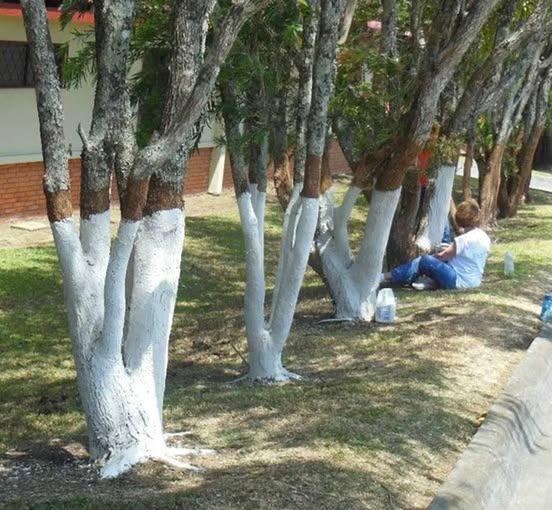
Venturing through the vast landscape of the internet, you’re bound to stumble upon a vibrant community of passionate plant enthusiasts from every corner of the world. Among these green-thumbed individuals, none exhibit more unwavering dedication than those committed to the noble cause of tree planting. Growing a mighty fruit tree from a tiny sapling is no small feat, and these ardent tree planters have some intriguing tricks up their sleeves. Have you ever wondered why some of them throw nets over their trees or why, on occasion, trees sport a coat of white paint?
For those familiar with the colorful language of tree markings, an orange dot often signals the impending fate of a tree – it’s earmarked for removal. Occasionally, you may encounter trees adorned with a regal purple hue, indicating territorial boundaries and issuing a warning to potential trespassers. But what about the pristine white coat?
The phenomenon of painting the lower trunks of trees white serves a crucial purpose in preventing sunscald, a potentially damaging occurrence during winter. Drastic temperature fluctuations between bone-chilling nights and sun-drenched days can induce bark splitting, a vulnerability that tree enthusiasts strive to shield against. The strategic application of light-colored paint acts as a shield, preventing the overheating of the wood and thwarting the emergence of future splits and cracks. This protective measure is commonly employed on slender residential trees or those gracing orchards with their fruitful bounty.
Leave a Reply