Sharing a home with some unwanted guests is a requirement of homeownership. We’re not talking about weird individuals hiding in your crawlspace, so don’t worry. Actually, we’re talking about bothersome insects that you may come across. Let me start by saying that, while I’m sure many of you feel the same way, I personally don’t like sharing my home with earwigs, spiders, or ants.
We are powerless to escape it, nevertheless. At least I hope not, these tiny creatures don’t perceive it as a premeditated house invasion. It’s simply where they belong. Ticks are one insect that I just cannot abide, even if I’ve learned to endure the most of the insects that have taken up residence in my walls.
I’m ready to wager that nobody enjoys ticks. They are genuinely repulsive organisms that spread illness rapidly. Because of this, it’s critical to understand how to spot tick egg clusters and what to do if you discover them in your lawn. Fortunately, we’ve compiled some helpful data to assist in addressing your urgent queries.
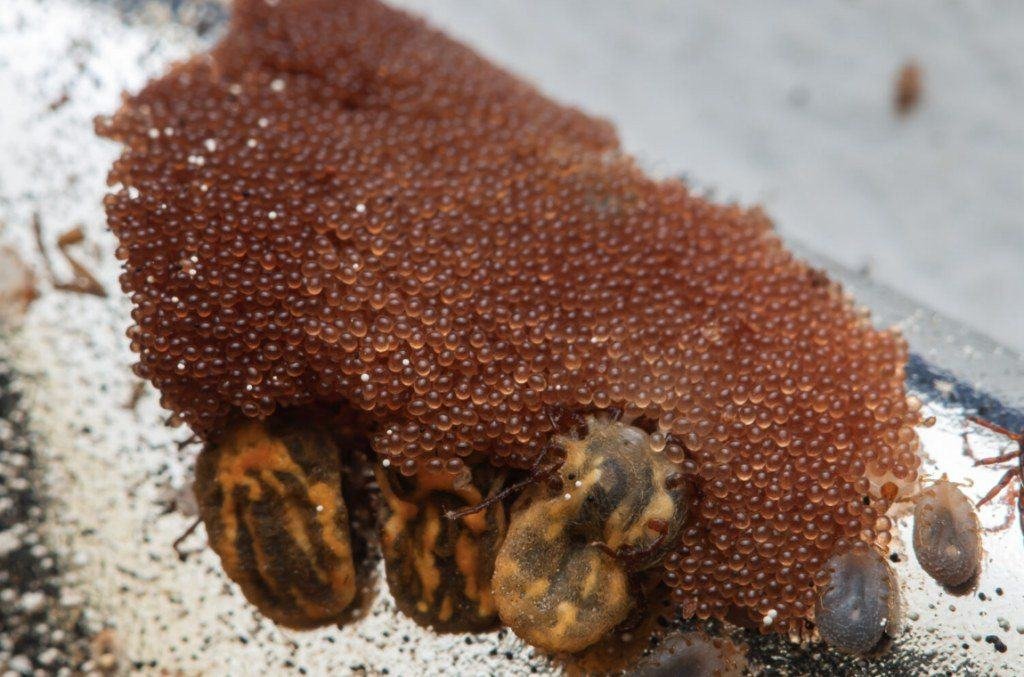
How to Spot Tick Eggs
Tick eggs are nearly invisible to the unaided eye due to their tiny size (about 0.5mm in diameter); they are about the size of a poppy seed. They often have an oblong or pear form and seem translucent. Usually, you can find them in groups affixed to foliage, plants, or other surfaces near the ground.
These eggs get smoother and more opaque as they get older. They might be light brown or pale yellow in color, and they have a glossy feel.
How to Proceed If Tick Eggs Are Found
When you discover what appears to be a clutch of tick eggs, panic sets in. Tick eggs are a big problem, though maybe that’s just me. It’s preferable to get rid of the eggs safely because ticks can spread diseases like Lyme disease and Rocky Mountain Spotted Fever.
For accurate identification and advice on what to do next, we strongly advise speaking with a local veterinarian or a professional pest control specialist.
Maintaining a Tick-Free Yard
It’s a fact that nobody likes to discover tick eggs in their backyard or any other yard. Therefore, it’s imperative to take action to reduce the likelihood of their presence.
Leave a Reply